


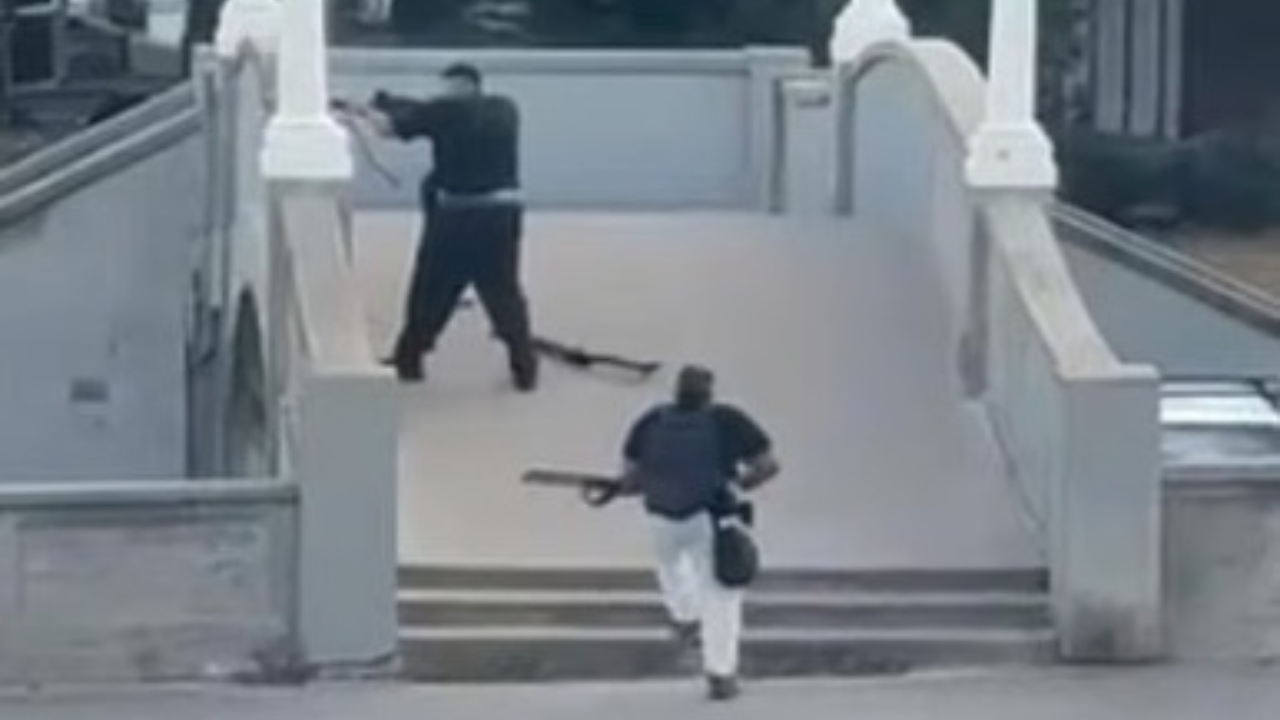
Several Australian news outlets are under fire after linking the Philippines to the deadly shooting at Bondi Beach Sunday, December 14.
16 people were killed when 24-year-old Naveed Akram and his father, 50-year-old Sajid, opened fire to a crowd attending the Hanukkah, or the “Festival of Lights.” Sajid was shot dead by police, while Naveed was rushed to a hospital where he awoke from a coma Tuesday night.
Following what was described to be a “terrorist attack,” Australian news agencies were quick to follow leads that pointed to the Akrams visiting the Philippines prior to the Bondi attack.
As reported by News.com.au, police claimed that the alleged suspects visited the Philippines, particularly Davao, sometime in November, and returned to Australia before the end of the month.
The news outfit described Davao City, the largest city in Mindanao, as a “terrorism hotspot where ISIS-affiliated groups have been active.” Meanwhile, a senior counterterrorism official confirmed to ABC that the father-son shooters “underwent military-style training” during their visit to the Philippines, a “hotspot of Islamist militants since the early 1990s, when terrorist training camps previously on the Pakistan-Afghanistan border were re-established in southern Mindanao.”
This came after it was discovered that Naveed had longstanding ties to members of Australia’s pro-Islamic State network. This included jihadist spiritual leader Wisam Haddad and youth recruiter Youssef Uweinat.
Bureau of Immigration spokesperson Dana Sandoval also attested to the travel, saying that the alleged suspects left the Philippines on November 28 on a connected flight from Davao to Manila, with Sydney as their final destination. Sajid entered the Philippines on an Indian passport, while Naveed used an Australian passport.
The Philippines’ notoriety for breeding terrorists was also reported by The Australian, where it said that “for almost half a century, the southern Philippines has been a nursery ground for Islamic extremism and terrorists that have exported murder and mayhem across the globe.”
UK newspaper The Express also tarnished the reputation of the Philippines when the Duchess of Sussex Meghan Markle was warned that “it would be too dangerous” for her to fly to the country to visit her father who had undergone an operation in Cebu City.
“Only a major security operation costing millions could guarantee her safety in the strife- torn southeast Asian country,” the outfit wrote in a December 13 article, adding that a “grimly-worded US State Department advisory” warned that travelling to the Philippines “heightened the risk of ‘crime, terrorism, civil unrest and kidnapping.’”