


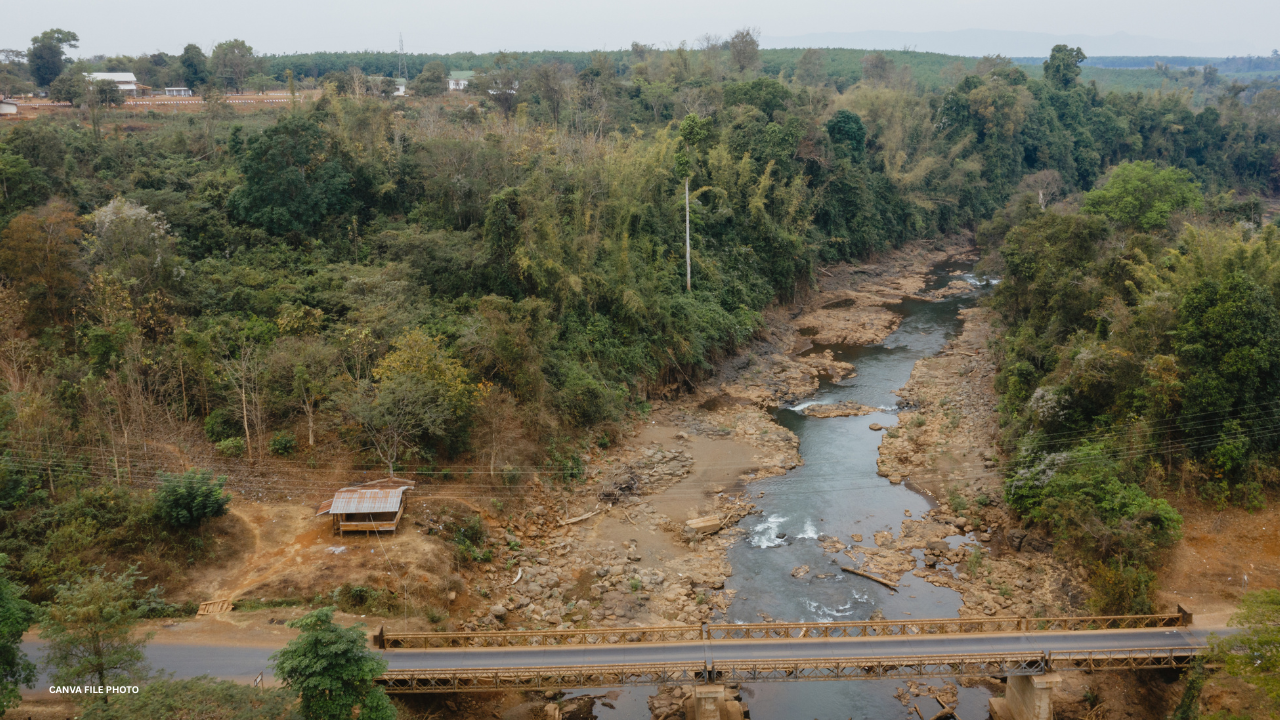
Rivers in Metro Manila are visibly polluted with floating solid wastes. But what is more alarming is that even rivers outside the national capital, such as those in the nearby province of Cavite, are also murky and filthy due to the dumping of untreated wastewater.
This persists because government agencies like the Environmental Management Bureau (EMB) of the Department of Environment and Natural Resources (DENR) fail to enforce laws that protect our natural bodies of flowing water.
What people can see is corroborated with the results of water quality tests, which states that 48% of organic pollution in these waters comes from domestic sewage. As a result, only 51% of rivers meet the standards for their intended use due to pollution and overexploitation.
Scientific studies also reveal that a large percentage of rivers in the country are polluted, with only 36% of rivers classified as safe sources of public water supply. Groundwater is also under threat, with 42% of tested sources showing contamination. Untreated domestic wastewater coming from households has been identified as the primary source of
contamination, while agricultural runoff and industrial wastes are also considered as major contributors of pollution.
Despite being an archipelago, our country ranks second lowest in annual water availability per person in Southeast Asia. Filipinos suffer from water scarcity with significant shortages, particularly in major cities and urban areas during the dry season.
It comes as no surprise that a recent report by a United Nations (UN) research institute has declared a global state of “water bankruptcy.”
The report claims that the world is entering an era of “global water bankruptcy” where rivers, lakes and aquifers depleting faster than nature can replenish them.
The culprit of this condition includes decades of overuse, pollution, environmental destruction and climate pressure, where it pushed many water systems beyond the point of recovery that a new classification was required.
A new study by the UN University Institute for Water, Environment and Health (UNU- INWEH) also said that “water stress and water crisis are no longer sufficient descriptions of the world’s new water realities.”
Related article: Informal Settler in River Easements: a Danger to the Community
Instead, the study proposes an alternative term — water bankruptcy — a state in which long- term water use exceeds resupply and damages nature so severely that previous levels cannot realistically be restored.
This condition is evident in the shrinking of the world’s largest lakes and the growing number of major rivers failing to reach the sea during certain parts of the year.
The report also pointed out the loss of massive wetlands, with roughly 410 million hectares — nearly the size of the European Union — disappearing over the past five decades.
Groundwater depletion is another sign of water bankruptcy. Reports state that around 70 percent of major aquifers used for drinking water and irrigation show long-term declines — an alarming phenomenon considering that water is among the most precious resources that sustains life.