


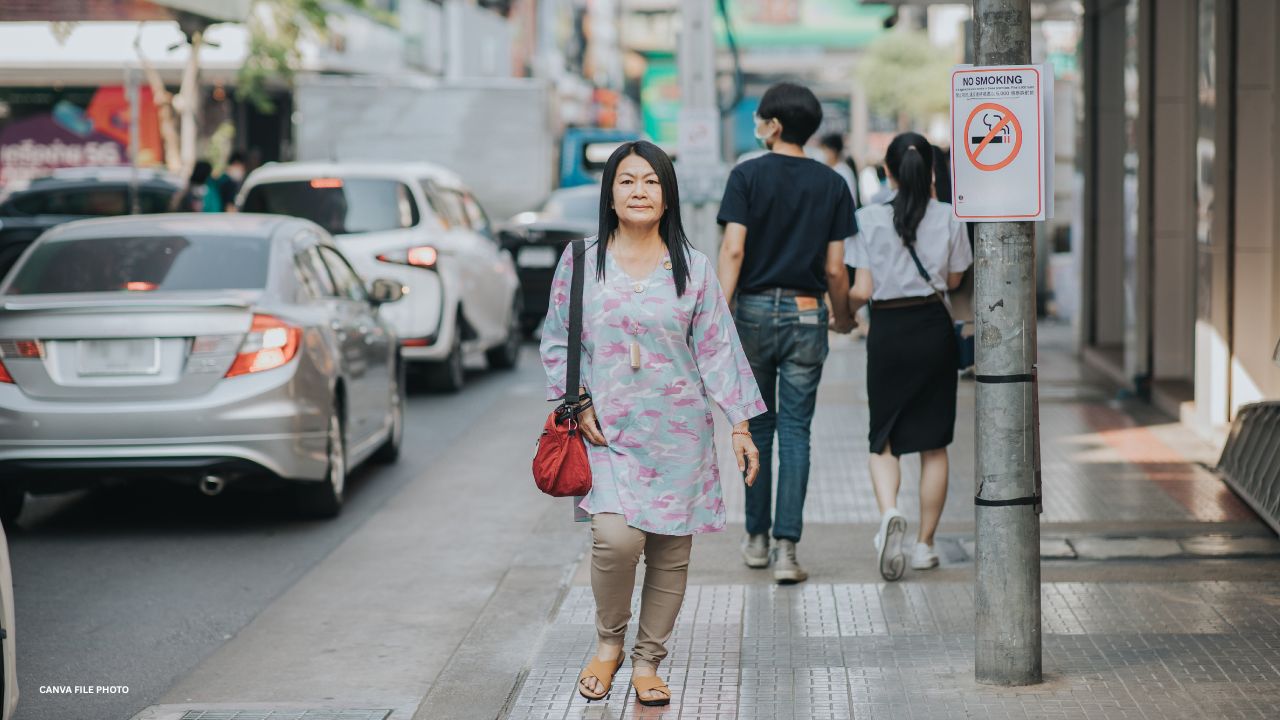
Metro Manila residents support the idea of living, working, and accessing essential services within a 15-minute walk or bike ride.
In a survey, 91 percent of young adults and 87 percent of older citizens expressed strong approval for the concept. A substantial number among the respondents, or 82 percent, said that they prefer to meet their daily needs locally.
The 15-minute city is an urban planning model where residents can access essential daily needs—such as work, housing, food, health, education, and culture—within a 15-minute walk or bike ride. It aims to reduce car dependency, improve air quality, and increase community life.
“Ang 15-minute city ay konsepto ng urban planning na lahat ng mga kinakailangan ng tao ay dapat kayang lakarin sa loob ng 15 minutes,” explained Nikka Gaddi, a Master of Arts (MA) in Economics student at Ateneo de Manila University.
Colombian-French scientist Carlos Moreno conceptualized this model in 2016 to create sustainable, human-centric cities.
In estate development, developers are creating self-contained communities that reduce the need for long travel. Projects like Arca South, Vermosa, Vertis North, Bonifacio Global City (BGC) in Taguig, Nuvali, among others, offer live-work-play environments primarily to combat traffic, pollution, and inefficient infrastructure.
Commuters, especially students, employees, businessmen, and workers in the informal economy, endure not only the high cost of transportation but also the time lost from daily traffic congestion. A staff member in a business establishment in Pasay said that she spends P250 on her daily fare.
Reynald, a call center agent near Mall of Asia (MOA), said that Baclaran, where he stays, is a walkable community. He said that it is dominated not by vehicles but by pedestrians and ambulant vendors. He feels secure in places where he can walk safely and reach his workplace within 15 minutes. A minimum wage earner, he said that walking enables him to save P30 to P40 daily.
Walkability also promotes active mobility because it encourages him to walk and not rely on passenger jeepneys or buses.
The 15-minute city enhances quality of life, advances environmental sustainability, improves physical and mental health, and fosters a more connected community.
Related articles: Creating Walkable Cities in the Philippines: Stepping Towards a Better Future